יום שבת, 31 במאי 2014

3 outdoor summer beach body activities

LAUREN ABRAHAM
LAURENABRAHAM

3 OUTDOOR SUMMER BEACH BODY ACTIVITIES

No gym, no problem. Get a wicked tan while sculpting your summer body with these workouts.
Summer's upon us and, I don't know about you guys, but I'm in beach-body-sculpting mode! The weather gets warmer and the clothes come off piece by piece, a toned body and great tan lines are a necessity!
As an outdoor-fitness fanatic, I do everything I can to take my workouts into the clean air, with the breeze blowing through my hair. And why not? The benefits of outdoor exercise extend beyond the workout. Outdoor workouts have been shown to improve your mood, clear your mind, and alleviate stress and anxiety more than their indoor counterparts.1,2
Not sure how to carve out your own fitness path and make the elements your playground? Use these tips to fuel your motivation, shape your summer body, and elevate your mood.

1
 OUTDOOR STAIR AND
STADIUM SESSION

Move over, stair stepper. Take your routine outdoors to put a new spin on working up a sweat. Whether you find some stairs in a local neighborhood or cruise into a high school stadium and dare yourself to climb up to the nosebleed section and back down, you're sure to get an epic booty-blasting workout!
Here are some insider secrets I use to step up my game. Try and implement them into your training and you'll reach the top before you know it.

ALTERNATE BETWEEN RUNNING AND LUNGING

I alternate between running and lunging every round (one trip up and back down). For the first round, I skip a level of stairs to create a high box/lunge sensation. I skip two levels most of the time to create a super-long lunge stretch and increase the intensity of the step-up, better activating my glutes, hamstrings, and thighs.
You can do this too, but you'll need to get your legs warmed up and accustomed to the movement before you start skipping stairs. The key is to keep the weight in your heel, not your toes. Isolating the weight in your heel will activate your glutes and get your booty ready for the bikini or board shorts you want to wear this summer!
"WHETHER YOU FIND SOME STAIRS IN A LOCAL NEIGHBORHOOD OR CRUISE INTO A HIGH SCHOOL STADIUM, YOU'RE SURE TO GET AN EPIC BOOTY-BLASTING WORKOUT!"

KEEP WEIGHT IN YOUR TOES FOR CALF ACTIVATION

I run my second set of stairs as intensely as possible, and I always make sure I reach the top without stopping. During this set, I focus on putting my weight on my toes. By doing this, I activate my calf muscles and give my glutes a break. Changing your method of getting to the top ensures that you target and isolate different muscles during each climb instead of just going through the same movements.

ACTIVATE YOUR ABS

When I'm coming down the stairs, I pace myself to go as fast and safely as I can. I engage my abs the entire way. You can do this by bracing your abdominal wall—tensing up as if you were expecting someone to punch you in the gut. Visualize pulling your belly button into your spine, and keep it tight. Just stay mindful and never let yourself fall prey to a "loose tummy."

2
 STAND-UP PADDLE BOARDING (SUP) AND SURFING

It's time to get your hair wet and face your fears in the water! Whether you live by the ocean and have access to some descent surf, or you're near lakes or rivers, some of the best times you'll have outdoors are when you're able to make a splash. Stand-up paddle boarding (SUP) is now the fastest growing water sport in the world. It's finally allowed those of us who always dreamed of being surfers to dive into the deeper parts of the open waters and explore.
SUP and surfing in general rank high among my favorite exercises. They're great for body sculpting and, when done correctly and with intensity, both activities are cardio driven, full-body workouts.
"SUP AND SURFING IN GENERAL RANK HIGH AMONG MY FAVORITE EXERCISES."
Plus, they're both fun to do with family, friends, or your significant other. Experience on the water brings about deeper connections—and that little adrenaline rush and added challenge has a unique ability to create strong bonds. Let me just say, paddling buddies make for epic friends.
SUP is my go-to sport to get me looking like a lean mean athletic machine. Looking to get your feet wet? Hang 10 with these tips:

STAND-UP PADDLE BOARDING ENGAGE YOUR ABS

This might sound like a no brainer, but a tight core is the key to stabilization. With stand-up paddle boarding, your abs should always be engaged to help activate stability on the board. When it comes to form, paddling with a mini bend in your knees puts your legs and glutes in a squat position, spelling major booty activation and quad burn. The resistance pull from each stroke means shredded arms and shoulders.

SURFING SHRED YOUR UPPER BODY

Surfing is by far the hardest sport in the world, and has the steepest learning curve, but who doesn't want to be an amazing surfer? I know I do. I still dream of the day I'll lay it down in a barrel and see the light at the end of the tunnel.
Even if you don't aspire to conquer the next big wave, surfing's a great way to shred your upper body, specifically your shoulders and back. Every time you pop up to catch a wave, you put yourself in a plank position (known as chadaranga in yoga). This adds crazy definition to your biceps and abs. When paddling correctly, you fire your shoulder muscles and lats. An added bonus: If you keep your legs in correct alignment, you engage your back and tone it, too. You'll get in all of your cardio and then some when intense waves force you to keep your head above water.

3
 BEACH, STREET, OR PARK YOGA

"TAKE ADVANTAGE OF BEING SURROUNDED BY NATURE. USE TREES TO PRACTICE YOUR HANDSTANDS, HEADSTANDS, AND HANGING SPLITS."
Yoga is my tried and true body sculptor. It keeps me lean and limber. I always hear people say "I can't do yoga because I'm not flexible." That's like saying "I can't go to the gym because I'm not strong enough." The reason we do yoga is to practice and increase flexibility of both the mind and body.
With the sun shining and weather warming up, why not take your yoga outside? Just kick off the ol' shoes and drop into a sweaty sun salutation. Tone and rejuvenate your body with a series of Serya Namasakar A, also known as the sun salutation. Take advantage of being surrounded by nature. Use trees to practice your handstands, headstands, and hanging splits. Much like a wall, they'll help you balance while practicing inverted moves.
Yoga heals the body internally. Many of the poses in yoga are isometric muscle holds that stretch your ligaments and muscles; this generates internal heat and causes you to sweat while ridding your body of toxins. It's a wonderful toning exercise and a natural way to detoxify the body.
When doing yoga outside, make sure you find a flat space that will lend itself to the stability needed for your poses. Here are some key tips that I always remind my yogis to be conscious of:

KEEP A TIGHT CORE

Always be mindful of having your core engaged and your focus ahead of you. When we practice yoga, we practice holding ourselves in "stature." Holding yourself in stature is important for good posture and keeps back aches at bay. You'll avoid hunched-over shoulders, lengthen and strengthen your physique, and give off a clear sign of confidence that's sure to translate into your day-to-day life.
"HOLDING YOURSELF IN STATURE IS IMPORTANT FOR GOOD POSTURE AND KEEPS BACK ACHES AT BAY."

BREATHE DEEP

Always find a rhythmic breath through the nose, while keeping your mouth closed. Practicing this will deepen your breathing cycle, which will transfer over to the way you inhale and exhale during workouts. It's guaranteed to create a fluid and calm breathing pattern that will help break the tendency to resort to short, choppy breaths during intense workouts.

KEEP YOUR SHOULDERS BACK

Always keep your shoulders back instead of rounded forward. This bad form can cause serious posture damage. Use yoga to help correctly align your body, lengthen your spine, and correct concaved shoulders. Be mindful of this shoulder posture both in and outside of the gym.

LISTEN TO YOUR BODY

Know the difference between pain and progress. Yoga is an activity where pain equals growth, but only when it's the kind of pain that pushes you in the right places. Your yoga practice is exactly that, yours. There is no right level you need to reach. I'm a certified level 5 yogi and still can't do the intense splits that are in many yoga magazines.
Just know that the sooner you get comfortable being uncomfortable, the faster you'll see progress and growth—both physically and emotionally. By taking your yoga outside, you'll have Mother Nature as your studio. You can "get grounded" and feel that sense of peace and tranquility.
REFERENCES
  1. http://health.usnews.com/health-news/family-health/heart/articles/2008/06/23/time-in-the-sun-how-much-is-needed-for-vitamin-d
  2. http://www.epa.gov/region1/communities/indoorair.html

RECOMMENDED FOR YOU

6 REASONS TO SHAPE UP FOR SUMMER

A heavy winter doesn't have to leave your motivation on ice. Reignite your passion for fitness and carve your summer body now! Warm weather's right around the corner.

SUMMER SHREDDED: GET A BEACH-READY BODY

Don't get caught with your shirt on when the weather warms up. Here's a six-week plan to make sure your physique turns plenty of heads this summer.

CALF WORKOUT: CARVE A SET OF SEXY SUMMER CALVES

A great pair of calves goes with any spring outfit! Give your legs a face-lift with this calf-carving workout.

יום שישי, 30 במאי 2014

diet doesnt mean denial

CHRISTIAN TALACTAC
XTIAN

DIET DOESN'T NEED TO MEAN DENIAL

Feeling unsatisfied with the same old clean/cheat, bulk/cut cycle? There may a better way. Learn the truth about flexible dieting!
Clean eating. We've all seen it held up as the best way—the only way—to live a fit life, look and perform like an athlete, and not die before our time. Of course, clean eating has a dirty little secret: It always comes alongside its greasy sidekick, the cheat meal.
This makes me sad, and it irks me. I'm talking about the whole clean/cheat setup, and really, the whole idea of "clean." I've spent time on the darkest side of clean eating—namely an eating disorder—and I think it's time for this way of thinking to die. My job now is to spread the gospel of flexible dieting.
Many of you might be familiar with that term, but it's probably from misguided articles and forum posts ridiculing the idea of IIFYM (aka, "if it fits your macros"). If you're a clean eater, you may have made some snarky remark a time or two about us flexible dieters being unhealthy. Perhaps you've even commented on our moral character. We're bad people, we're going to hell for eating pretzels, and we should be ashamed of ourselves because we eat our baked potatoes with butter. The gall!
Enough with the snarky name-calling! Let me show you the truth, the way, and the light to food freedom! The first step is to debunk the most common myths about flexible eating.

"ENOUGH WITH THE SNARKY NAME-CALLING! LET ME SHOW YOU THE TRUTH, THE WAY, AND THE LIGHT TO FOOD FREEDOM!"

MYTH 1 FLEXIBLE DIETERS EAT A BUNCH OF CRAP ALL DAY LONG

False! Eating a bunch of crap is ... well, crap. That's the typical American diet, and it's far from what constitutes flexible dieting.
KEY COMPONENTS OF FLEXIBLE DIETING INCLUDE
  • Overall mindfulness of macronutrient and micronutrient intake, whether you count macros. This means that you're aware of approximately how much protein you consume, and that you also get sufficient fiber.
  • Understanding that treats and junk food are allowed, but not as the norm. I like to recommend an 80/20 rule. Other people lean toward 90/10; that still feels fairly restrictive to me.
  • Portion control. This is vital. There's a difference between 1 doughnut and 12, and you don't abuse this. Think a handful of gummy bears rather than a whole bag. A small serving of sweet potato fries with a chicken salad. A glass of wine to complement a steak.
So what do flexible dieters eat? Primarily whole food sources, with a sprinkling of fun indulgences on the side. If the typical American is going to eat a croissant and a glass of orange juice for breakfast, he is not a flexible dieter. What a flexible dieter might do instead is throw in an omelet with that meal, keep the croissant, and then choose better carb sources for the rest of the day. Why? Because, a croissant is a treat.
Believe me, I've definitely tried to get in my protein and fiber through junk food alone, and it can't be done. There's no realistic way to meet your daily nutrient needs through chocolate and gummy bears. Besides, who wants to survive on a steady diet of nothing but sugar and fat? That would make anyone sick. In fact, it's making plenty of people sick all around us, all the time. It's called type-2 diabetes.
And if you do end up having a particularly treat-heavy day, then the next day, you rein it in a little. You don't obsess over it; you don't worry about it; you just move on. It's all about checks and balances. Don't mistake that for bingeing and purging—there's a big difference.

MYTH 2 CLEAN EATING IS ALWAYS HEALTHY EATING

What's healthy about a restricted food list? There is nothing positive that can come out of putting a whole slew of foods off-limits and shackling yourself to specific food items. Let's take a look at your clean diet for a second:

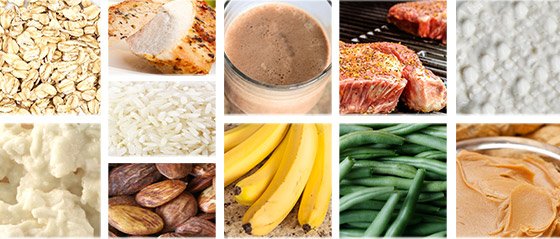
Meal 1: Oats and egg whites for breakfast
Meal 2: Chicken, white rice, and almonds for lunch
Meal 3: Protein shake with a banana post-workout
Meal 4: Lean beef and green beans for dinner
Meal 5: Casein or cottage cheese before bed, maybe with peanut butter
Repeat. Repeat. Repeat. And let's be honest, I've given a generous portrayal of a clean diet there. The real thing is often far, far more repetitive.
Yes, I understand that consuming a nutrient-dense diet is incredibly healthy. But that's not what "clean eating" is. There is an incredibly high correlation between exclusive eating (i.e., limiting food choices) and binge eating. This is no coincidence. Study after study has shown that as soon as you deem a food forbidden, your desire for it increases even more, even if you may have never wanted it in the first place.
Not allowed to eat chocolate? All of a sudden, that's all you can think about.
On the flipside, having the option to consume a treat doesn't mean that you willnecessarily chow down on it. Rather, it means that you won't be using up your willpower to actively resist the food.

MYTH 3 CLEAN EATING WITH IMMENSE "CHEAT" MEALS IS THE SAME THING AS FLEXIBLE EATING

You tell me what's worse for your health:
  • Eating a square of chocolate every evening, savoring every bit of it, and then moving on with your life, OR
  • Hurriedly scarfing down not one, not two, but three whole chocolate bars in one sitting with no self-control whatsoever and then feeling guilty—not to mention bloated—for the entire next day, if not longer.
I think the answer is obvious.
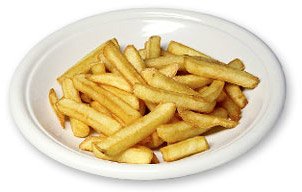
Newsflash: It's entirely possible for a flexible dieter to eat the same way as a clean eater most of the time. Yet come Saturday night, the clean eater may go out to dinner for his weekly cheat meal and have a burger, French fries, and a milkshake, followed by cheesecake for dessert, and then come home and eat everything but the kitchen sink. The flexible dieter, on the other hand, can have the same burger and French fries and have no problem stopping there. Hell, he may not even finish the fries because he'sreasonably full and feeling satisfied.
Do you see the difference here? The flexible dieter hasn't lost touch with what satisfaction feels like. Throughout the week, the flexible dieter stuck to whole food sources not because he had to but because he wanted to. He had no problems whatsoever with controlling his food intake on the weekend.
"But sugar is bad for me," a clean eater might proclaim. Well, did it ever occur to you that the only times you allow yourself to consume too much added sugar is when you binge?
Sugar itself may not be the culprit. After all, apples contain sugar. It's the massive quantity of added sugar you consume in one sitting that makes you sick.

MYTH 4 FLEXIBLE DIETERS FOLLOW WEIRD OR BOGUS MACROS

Not all flexible dieters choose to count their macros. But for those who do, the guidelines for determining macronutrient guidelines aren't too different from those of bodybuilders and other strength athletes.
Namely, protein intake is usually around 1 gram per pound of bodyweight, and carbs are 0.6-1.5 grams per pound, depending on goals, the leanness of the individual, carb tolerance, body type, metabolic capacity, age, and activity level. Fats fill in the remaining calorie allotment. People who are striving for muscle gain naturally will have a higher calorie allotment, 16 times bodyweight or upward. People who are looking to lose weight would start off closer to 10-12 times bodyweight.
Let's use me as an example. I'm a 24-year-old female mesomorph, 115 pounds, with approximately 18 percent body fat. I train five days each week with a low-to-medium activity level for my job. I would calculate my maintenance macros for training days as follows:
Total Calories: 115 pounds x 15 = 1,725
Protein: 1 g/lb. bodyweight = 115 g, or 460 cal (4 cal/g protein)
Carbs: 1.5 g/lb. bodyweight = 173 g, or 692 cal (4 cal/g carbs)
Fats (total remaining calories): 1,725 - 460 - 692 = 573 fat calories, or 64 g fats (9 cal/g fat)

TWEET THIS ARTICLE: Feeling unsatisfied with the same old clean/cheat cycle? Learn the truth about #flexibledieting!

Some flexible dieters like to carb cycle between training days and off days like I do, not only for the physiological benefits but also because it affords them the leeway to fit in higher-carb treats on training days and, conversely, higher-fat treats on off days. My off-day macros might look like this:
Total Calories: 115 pounds x 15 = 1,725
Protein: 1g/lb bodyweight = 115 g, or 460 cal (4 cal/g protein)
Carbs: 1 g/lb. bodyweight = 115 g, or 460 cal (4 cal/g carbs)
Fats (total remaining calories): 1,725 - 460 - 460 = 805 fat calories, or 89 g (9 cal/g fat)

Having 89 fat grams for an off day would allow me to consume foods including, but not limited to full-fat cheese, coconut oil, nut butters, and maybe even some fried goodness.
This is just one of many possible approaches to the macro puzzle. Flexible dieting is all about honoring your personal preferences with regard to macronutrient amounts, food choice, meal timing. This will allow you to adhere to your program and consequently yield the best results.

MYTH 5 FLEXIBLE DIETERS BELIEVE THAT EATING A CHEESEBURGER IS THE SAME AS EATING A LEAN CUT OF STEAK

Look up #flexibledieting hashtags on Instagram and all you'll see is the ice cream, Pop Tarts, and burgers that we consume. But what the pictures don't tell you is that those foods actually make up a small portion of our daily food. We typically don't show off the chicken breast, sweet potatoes, and veggies we consume. Why? Because it's way more fun to talk about our treats.

So no, a cheeseburger is not the same thing as eating a high-quality cut of protein. But if we decide to order that burger, it's because we've been eating well recently, weighed our options, and perhaps even factored the meal into our macros. We've decided that that's what we truly wanted to eat, and we have no qualms about indulging our taste buds for a night.
Again, flexible dieters prescribe to an 80/20 rule or some variation. We care about our health just as much as a clean eater does, but we also understand that to make a lasting lifestyle change, we need to create sustainable habits. We have no timeline to get to where we want to be; we're all about enjoying the ride.
Are you a flexible dieter? If not, what are you waiting for? Freedom awaits you. Are you a clean-eating diehard? Make your case in the comments.


I would like you to see some of my services:


all the information is taken from bodybuilding.com! they own the credit